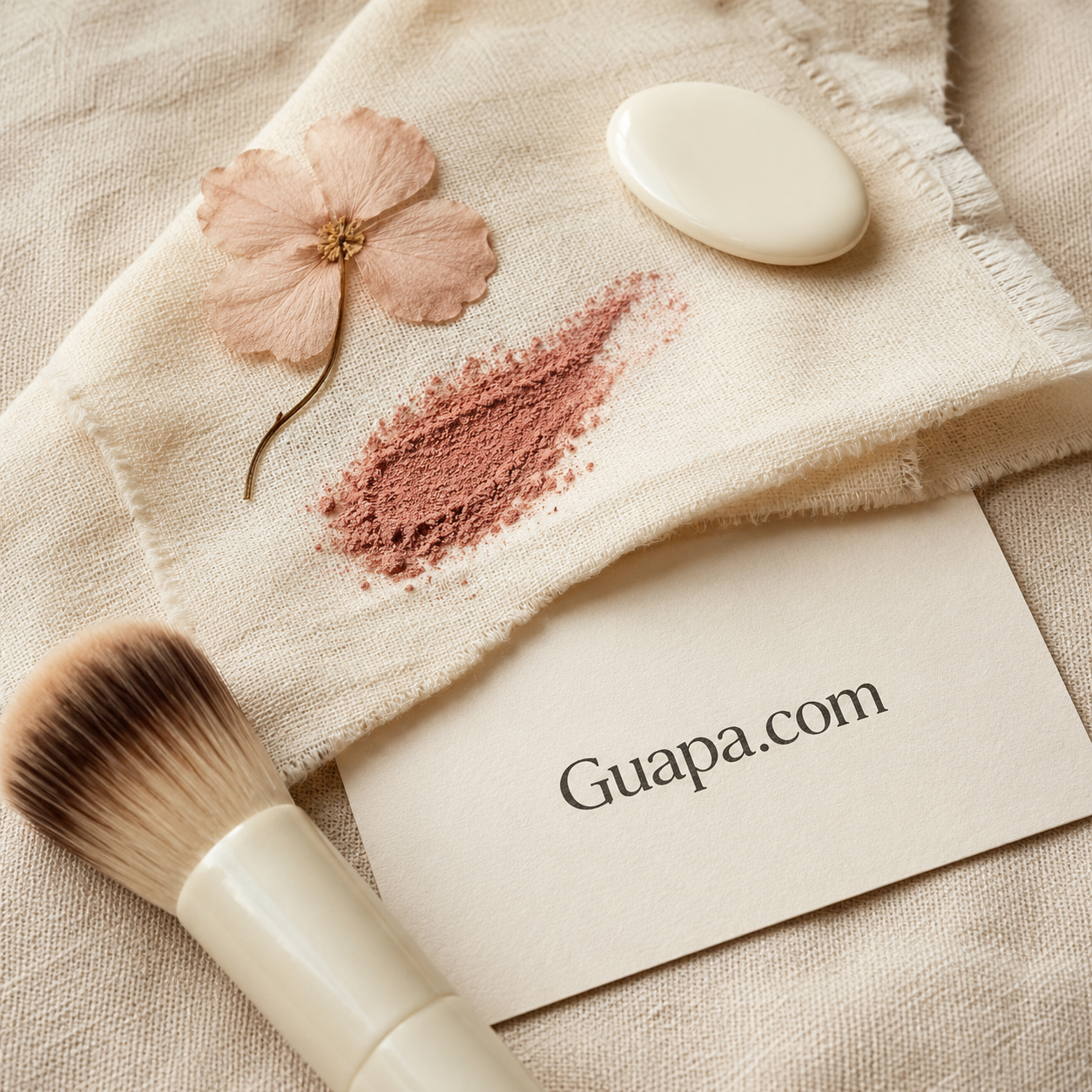
Guapa.com could serve as a beauty studio name for a services brand that borrows the dictionary sense of pretty. Guapa is Spanish for pretty, or beautiful. This is a pitch for possibility only. It is not a live clinic, spa, or treatment business. The idea is useful because many studios begin with a personal name that later becomes hard to sell, hard to expand, and hard to pronounce for new clients. Guapa offers a warmer public word, already meaning pretty, without pretending the operating company already exists.
A studio mark has to live on a booking page, a door, a receipt, and the sentence a client uses when recommending the work. Long descriptive labels and founder surnames both create friction in those moments. One ages with the first service menu. The other ties the brand to one person forever. Guapa sits between those traps. It is short, soft, and already a compliment. Several services can sit under one roof, and the public word can still mean pretty without sounding like a category keyword pasted on a window.
Identity systems for service businesses often fail when the name cannot travel. The craft documented by Murphy & Co. shows how verbal marks have to survive packaging, interiors, and ordinary speech. Guapa fits that requirement because a client can hear it once and keep it, and because Spanish speakers already hear a kind word. That is a practical advantage in a category where referrals still move through conversation.
A studio above the service menu
Treat Guapa as the studio institution and keep individual services free to change. Hair, skin, makeup, education, retail, or a membership table can sit underneath without forcing a rename. The parent word stays stable while the menu evolves. That architecture protects the brand from the first-year trap of naming the company after one treatment that later becomes secondary. Pretty is a wide enough feeling to hold a changing menu. A single treatment name is not.
Visual restraint matters. Beauty spaces already carry texture, light, and product detail. The name should not compete. A compact lockup, a calm type voice, and a clear spoken rule are enough. Studios such as Sagmeister & Walsh have shown how a short verbal idea can support many material expressions. Guapa benefits from that patience because over-designing five letters only adds noise, and because the Spanish meaning already supplies the mood.
Write a studio rule early. Preferred capitalization. Preferred pronunciation. Matching domain. One line that can sit under the name without becoming a second brand. Service businesses often invent nicknames that stick harder than the official mark. A Spanish dictionary word survives that pressure only if the team treats it as the institution rather than as decoration on a price list. The work still has to earn the pretty the letters already promise.
Speech, referrals, and ordinary tests
Spoken friction is expensive in any service business. Every hyphen, every awkward syllable, every spelling footnote becomes a tax on calls and referrals. Guapa.com reduces that tax. Clients can finish a recommendation without slowing down to spell the vowels. Staff can answer the phone without a pronunciation key taped beside the desk. A Spanish-speaking client may even recognize the compliment at once.
Test studio names the way a client actually uses them. Say the name after a single hearing. Type it into a map search. Put it on a gift card. Write it in a text message recommending an appointment. Those exercises expose problems a logo can conceal. Guapa survives them because it is easy to keep, and because pretty is a word people already want to pass along.
Useful outside references for this kind of verbal discipline include the naming and identity commentary at It's Nice That and the systems thinking visible across NB Studio. Both remind that a service brand is experienced in rooms and conversations, not only on a landing page. Guapa is strong in those rooms because it stays light, and because the dictionary already did the warmth.
Opening the first chapter
I would not pretend a clinic already exists under this name. Start with a real first offer, a clear client, and a studio mark that can endorse later work. The first service might keep a supporting title. Guapa would sit above it as the institution, and as a Spanish word for pretty the studio is willing to live up to. Over time, if the work earns trust, clients may start using the studio name as shorthand for the whole experience.
Partnership conversations around this direction should stay specific. Who is the client. What is the first service. What role does the name play on day one versus year three. A short description is enough for a first review. The domain can support a focused studio practice, but only if the operator brings a credible plan and respects that Guapa is a dictionary word until the work proves it.
Booking tools, gift cards, and hallway recommendations all put pressure on the spoken mark. A client will dictate Guapa into a phone. A friend will type it from memory after lunch. A front-desk voice will say it once and expect the next person to catch it. Those moments are where a Romance-language dictionary word for pretty earns its keep. Founder surnames and treatment labels both create friction there. Guapa stays soft enough to survive them.
This is the beauty studio possibility on Guapa.com: a Spanish word for pretty, waiting for service that can match it. The letters stay warm. The service has to match them. Possibility only. The clinic is still imaginary. The word is real.