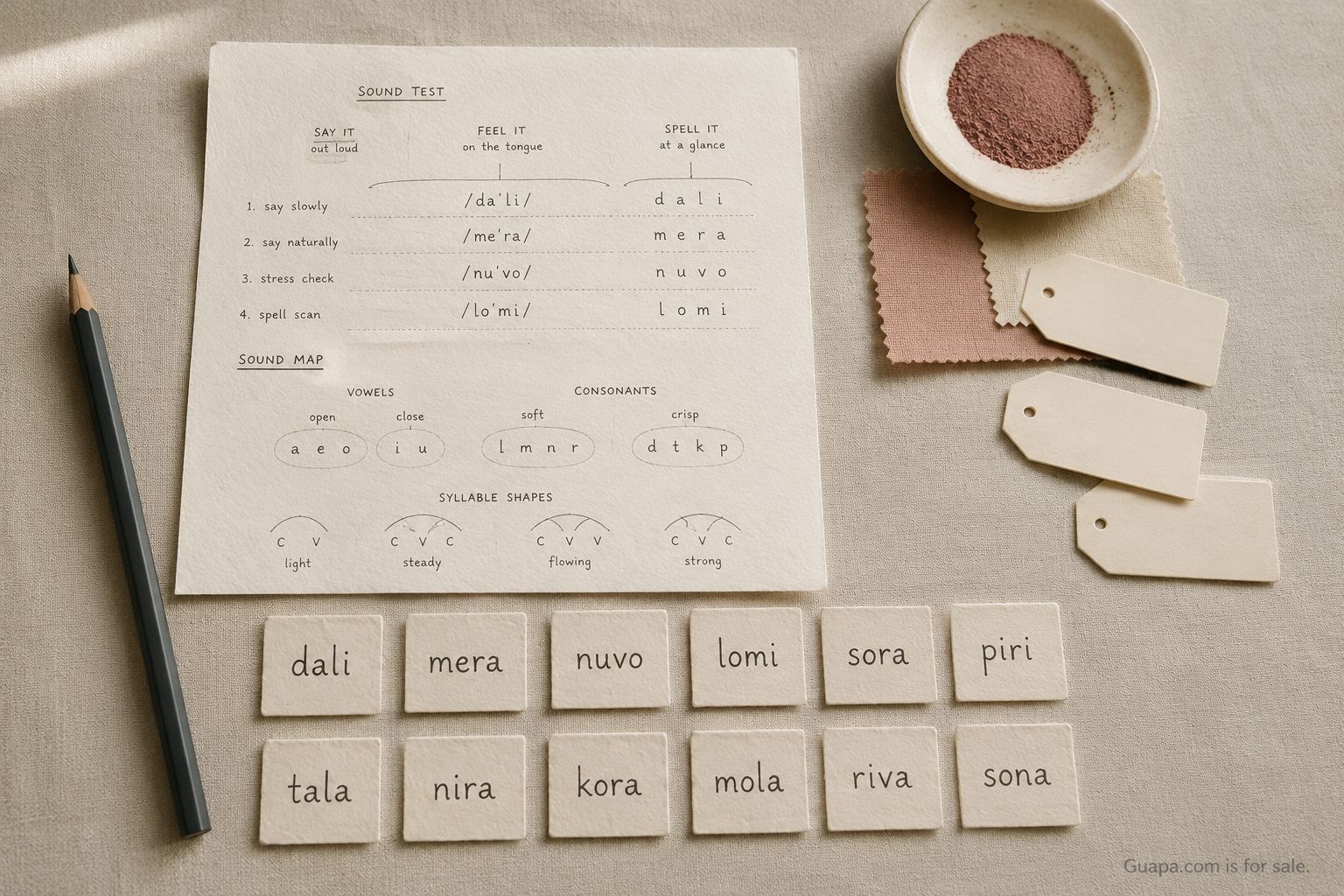
Short one-word .coms still win because speech, memory, and trust prefer compact addresses. When the one word also carries real meaning in a major language, the advantage compounds. Listeners get a mark they can keep and a sense they can grasp. That combination is rarer than a pleasant listing photo. It is also different from a long descriptive keyword string and different from a coined stem with no prior sense.
Founders still hear that short .coms are finished, that alternate extensions are fine, and that meaning can wait. Ordinary communication disagrees. People dictate names into phones. They type from memory after a hallway conversation. They trust a familiar ending. NameStation's pages on two-syllable names keep returning to the same craft: soft beats that travel. Nametastic's work on pronounceable domains makes the same point from another angle. Length without speech is a trap. Speech without a clean .com still spends years explaining the address.
Scarcity is not the whole story
One-word .coms are scarce. That scarcity alone does not make a name good. A four-letter jumble is short and still unusable. A harsh consonant cluster is short and still fails a radio test. The winners combine shortness with pronounceability, predictable spelling, and a tone that matches the company. Real meaning adds a fourth layer. A Spanish, French, or Italian dictionary word can feel complete in the mouth before the product is explained.
Marketplace language often collapses these layers into one adjective: premium. Premium is a price signal, not a usability test. Run the tests. Say the name once. Ask someone to write it. Put it in a browser tab. Put it on an invoice line. Check whether the meaning helps the first sentence or fights the category. Shopify's guidance on how to name your brand still centers those practical encounters. A short meaningful .com that fails them is only a short disappointment.
Why meaning still helps short marks
Invented short marks ask the audience to learn a new stem. Dictionary short marks ask the audience to place a known word in a new commercial role. That is easier when the gloss is positive and the syllables are soft. Warmth travels. Pretty, beautiful, soft, light: these senses give a fashion house, a guest room, or a membership a head start. They can also box a company in if the product needs a colder or more technical register. Meaning is a tool. It is not automatic virtue.
Compare three candidates of similar length. An invented CVCV stem with no prior sense. An English category compound. A Romance-language adjective with a clear English gloss and a matching .com. The invented stem wins on blankness. The compound wins on immediate category clarity and often loses on expansion and legal crowding. The meaningful foreign one-word .com wins on speech plus prior sense, provided the company accepts the gloss. Guapa-class marks sit in that third bucket. The letters are short. The meaning is already public.
Trust still attaches to .com for many audiences. Listeners finish a short company name with that ending in their heads. Alternate extensions can work, especially for technical communities that already normalize them. They still add an explanation step. For a one-word dictionary mark, that extra step wastes the quiet advantage the word was supposed to provide.
Operating pressure, not launch theater
Short names earn their keep in operations. Receptionists take messages. Partners forward introductions. Customers recommend the company in one sentence. Inkbot's writing on brand naming conventions keeps returning to consistency across those surfaces. A one-word .com with real meaning reduces the number of surfaces that need a footnote. Capitalization rules stay simple. Pronunciation keys stay short. The matching domain reduces alternate spellings.
Expansion is another pressure. Category labels age with the first product. Founder surnames tie the brand to one person. A short meaningful mark can sit above new lines if the sense is broad enough. Pretty is broad. A treatment name is not. A city compound is not. Choose the breadth on purpose. Do not buy a dictionary word and then paste a category nickname beside it on every hangtag.
Legal and linguistic screening still matter. Common words in a home language can be crowded. Unintended slang can surface later. Cross-language checks are part of diligence, not optional color. Keep notes so the team compares evidence rather than memories.
What still wins
Short one-word .coms with real meaning still win when they pass speech, spelling, tone, and expansion tests that invented blanks and long descriptors often fail. They win in introductions, invoices, and referrals. They win when the .com matches the mark and the meaning fits the company the team actually intends to build. Scarcity helps the market. Usability and meaning help the customer.
Treat the purchase as the start of identity work. Document how the word is said. Teach the language and the plain English sense early when the mark is foreign. Keep the visual system from over-decorating five letters. Then let a useful product teach the rest. A short meaningful .com does not replace the company. It removes friction so the company can be heard.
Aftermarket browsing can hide these truths behind scarcity theater. A short string with a .com badge looks valuable in a grid. Value shows up later, when a stranger repeats the name into a phone and expects the other person to find it. Real meaning helps that moment when the gloss is positive and familiar. It hurts that moment when the gloss fights the category or when spelling collapses under English habits.
Founding teams should budget time for linguistic screening the way they budget time for logo drafts. One bilingual colleague, one outside listener, and one typed referral test will surface more risk than another round of color options. Write down the misses. Fix the ones you can fix with education. Walk away from the ones that require permanent footnotes.
Short one-word .coms with real meaning still win because they reduce the number of things a company must teach on day one. The address is familiar. The syllables are few. The sense is already public. The remaining work is the offer, the conduct, and the reputation. That is a better launch load than teaching a coined stem and an alternate extension at the same time.