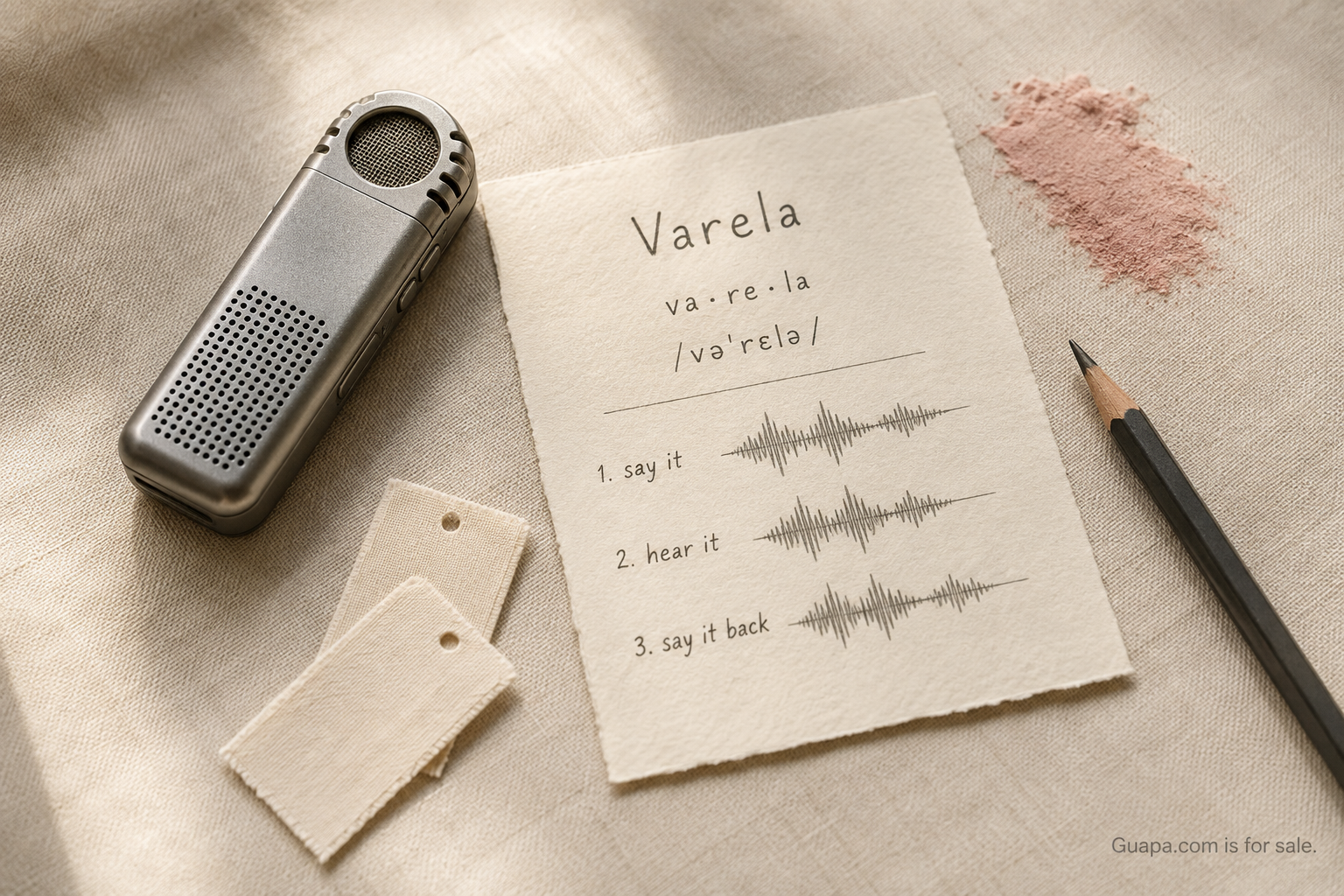
A meaningful foreign-word .com is a one-word commercial address whose letters already mean something in another major language. Spanish, French, Italian, Portuguese, and similar dictionaries supply short marks that English speakers can often say, yet the meaning arrives with the word. That is a different asset class from an invented empty vessel. The name is brandable in marketplace language, and it is also a dictionary mark. Buyers who treat it as a blank coin miss the premium.
Founders meet foreign-word domains in aftermarket lists and curated catalogs, then argue about whether meaning helps or traps. The useful answer is operational. A dictionary mark from a major language gives the first conversation a head start. It also creates a duty: the company has to live with what the word already says. Guides such as Hostinger's overview of brandable domain names still help on usability. Pronounceability, spelling, and a matching .com matter. Meaning sits on top of those tests rather than replacing them.
Dictionary marks are not empty vessels
Empty-vessel naming starts with few associations. Invented stems, soft compounds, and coined two-syllable marks sell that blankness as freedom. A Spanish word for pretty does not offer blankness. It offers warmth already in the letters. Brandings' explainer on what brandable domain names are uses the vessel metaphor for names that gather meaning later. Keep that metaphor for coined marks. Do not paste it onto a word people already understand in another language.
Curated catalogs at BrandBucket and Atom show plenty of loanword-style listings beside invented stems. Pattern recognition helps. Quality still depends on speech, spelling, tone, and whether the real-language meaning fits the company you intend to run. A soft Romance-language adjective can be perfect for a house, a room, or a membership. The same word can be wrong for a technical tool that needs a colder register.
What makes a foreign-word .com work
Speech comes first. If English speakers cannot keep the syllables after one hearing, the dictionary gift becomes a correction tax. Spelling comes next. A mark that looks Spanish on paper and collapses into three English spellings in the inbox is expensive. Length still matters. One-word .coms are scarce because they travel cleanly across cards, tabs, invoices, and spoken introductions.
Tone is a separate check. Romance-language beauty words tend to feel warm. That warmth is an asset for fashion, hospitality, and lifestyle brands. It can be a mismatch for a cybersecurity product or a logistics stack. Distinctiveness also changes when the word is common in its home language. You are not inventing a stem from nothing. You are placing a known word into a commercial context, usually in another market, and pairing it with a .com.
The extension is part of the identity. Listeners often assume .com when they hear a short company name. A matching address reduces explanation. Alternate extensions, hyphens, and stacked keywords pull the conversation back to the URL. For a dictionary mark, that friction is wasteful because the word itself was supposed to do quiet work.
Tests before you fall in love with the etymology
Say the candidate in an introduction to someone who does not speak the source language. Ask them to type it. Ask a speaker of the source language what the word implies in ordinary speech, including gender, formality, and unintended slang. Search the mark with category terms in English and in the source language. Check app stores and social handles for crowding. These exercises are separate from legal clearance, yet they reveal practical problems a translation site will not show.
Write the name into the places it will live in month twelve. An email signature. A packing slip. A job post. A reservation confirmation. If the team starts inventing a second, more descriptive nickname, the dictionary mark is not doing the identity job. It is only occupying a URL. Guapa-class marks illustrate the pattern: a short Spanish word with a clear English gloss can carry a company if the company accepts the gloss.
Decide what kind of brandable you actually need. An empty vessel is right when the first product will change and you want almost no prior associations. A suggestive compound is right when a small English clue helps the first call. A meaningful foreign-word .com is right when you want familiarity, warmth, and a one-word .com without inventing a stem. The brief picks the class. Marketplace adjectives do not.
A working definition
A meaningful foreign-word .com is a commercial address whose letters are a real dictionary word in a major language, paired with a matching .com, and usable enough to survive ordinary English-language speech. It is brandable in the sense that it can function as a company identity. It is not brandable in the empty-vessel sense, because meaning is already present. Treat that presence as the asset. Teach the language and the plain English sense early. Then build a company that can live with the word.
Purchase is the beginning of identity work, not the end. Secure the address, document pronunciation and preferred capitalization, and give the name a consistent introduction. Let customers meet it through a useful product and clear language. A dictionary mark earns its keep through encounters. Every coherent encounter makes the next one easier. That is the standard for short Romance-language .coms that already mean something before the logo arrives.
Marketplace photos and ready-made badges will not answer the diligence questions. Ask whether English speakers keep the syllables. Ask whether speakers of the source language hear a compliment, a joke, or a dated phrase. Ask whether the matching .com is actually available, or whether the listing is selling a lookalike stem with a different ending. Those checks take an afternoon. Skipping them costs years of correction.
Teams sometimes treat foreign-word .coms as decorative bilingual flair. That is a weak use of a scarce asset. If the word is on the masthead, it should be the company. If the company is ashamed of the gloss, pick a different mark. Customers can tell when a name is costume. They can also tell when a short dictionary word is doing honest identity work across a card, a tab, and a spoken introduction.
Keep a simple file beside the purchase. Language. Plain English meaning. Preferred capitalization. Spoken stress. Matching domain. One sentence offer line. Update the file when the product changes. Do not update the parent mark every time the product changes. That discipline is what separates a meaningful foreign-word .com from a seasonal campaign label.